
Forest Sounds Wall Mural – Large Woodland Trees Wallpaper for an Immersive Nature Experience
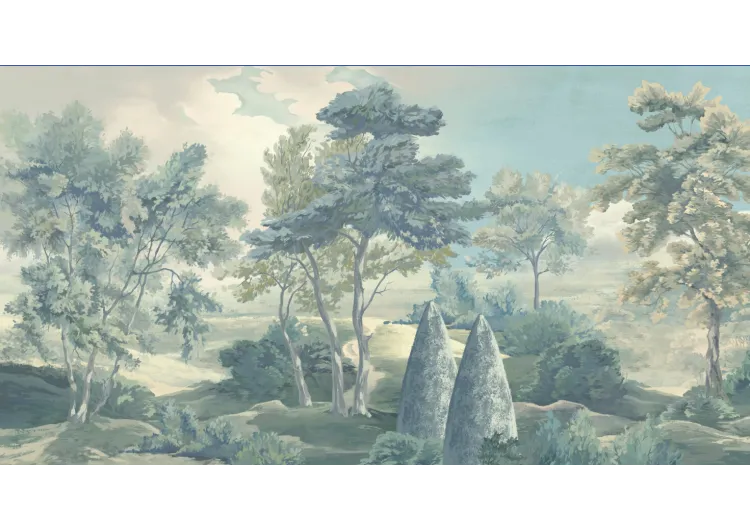
Learn how misty forest murals and ambient soundscapes create immersive, calming spaces. A full guide to choosing, customizing, and installing woodland wall art.
Forest Sounds Wall Mural – Large Woodland Trees Wallpaper for an Immersive Nature Experience
A Forest Sounds wall mural combines high-resolution woodland trees wallpaper with intentional audio to create an immersive nature wall covering that restores calm and expands perceived space. This article explains what a forest sounds wall mural is, why wall art and foggy forest wall murals deliver specific calming effects, and how to pair visuals with sound to lift mood or improve focus.
Many people struggle to bring nature indoors without sacrificing style or practicality; a nature-inspired mural solves that by offering scale, texture, and atmosphere while remaining adaptable to different rooms. You'll learn how scale, composition, and mist effects transform room depth, which styles and palettes work best, how to integrate ambient soundscapes, and practical guidance on materials, customization, installation, and care.
Throughout, we use terms like forest mural for walls, calming forest wallpaper, and biophilic wall covering to show how visual and audio elements combine for restorative interior design.
What Is a Forest Sounds Wall Mural and How Does It Transform Your Space?
A forest sounds wall mural is a large-scale woodland scene wallpaper paired with curated ambient soundscapes so that sight and sound form a cohesive sensory environment. This combination works because visual depth cues—vertical trunks, layered foliage, and atmospheric mist—interact with audio cues like birdsong or distant wind to reinforce spatial perception and emotional tone.
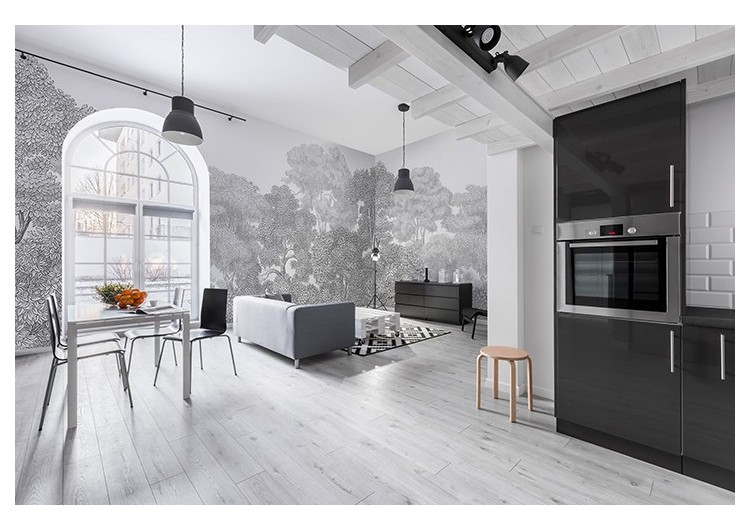
The result is an immersive nature wall covering that can make a small room feel more expansive, soften acoustics, and promote relaxation or concentration depending on sound choice. Designers use these murals in bedrooms, living rooms, and home offices to create a nature-forward focal wall that reads as both art and environment.
Understanding how the visual composition guides attention helps determine mural placement and scale, which we explore next in the context of woodland-specific visuals.
What makes woodland trees wallpaper unique in nature wall coverings?
Woodland trees wallpaper stands out because tree trunks create vertical rhythm and a natural scaffold that the eye reads as depth and structure, unlike flat landscape imagery. The meristic pattern of trunks and branches forms repeated vertical lines that lead the eye upward, which can make ceilings feel taller and rooms feel more structured without adding visual clutter.
Textural detail—bark, needle clusters, and leaf silhouettes—adds tactile realism that holds up at large scale; this is why foggy forest wall mural designs often employ subtle high-resolution textures. Designers choosing a birch tree mural, pine forest mural, or oak tree wallpaper consider how these textures and contrasts will interact with furniture scale to create a cohesive interior narrative.
The next subsection explains how adding mist or fog amplifies these effects by softening contrast and enhancing atmospheric perspective.
How do misty forest feature walls create a calming atmosphere?
Misty forest feature walls use atmospheric perspective—softening distant forms and muting midtones—to reduce visual complexity and lower cognitive load, which promotes calm. Fog acts as a natural low-pass filter for visual detail, allowing the viewer's attention to rest on simple shapes and gradients rather than busy patterns, and this visual quiet supports relaxation in a way similar to soft lighting.
In practice, misty tones pair well with low-sheen finishes and diffused lamps, which intensify depth cues and prevent glare that could break the tranquil effect. When paired with complementary hues—muted greens, slate blues, and warm neutrals—the misty mural becomes a sanctuary backdrop for reading, meditating, or focused work.
The next section explores how adding forest sounds deepens immersion and shapes emotional response.
How Can Forest Sounds Enhance the Immersive Experience of Your Wall Mural?
Forest sounds enhance an immersive mural by adding temporal and spatial cues that align with the image, making the room feel both larger and more natural. Soundscape wall decor functions through simple semantic triples: ambient birdsong → establishes morning context, flowing water → signals calm and continuity, distant wind → suggests scale and movement across the scene.
These audio cues change how the brain interprets depth and mood, so the same visual mural can feel energizing with dawn chorus or meditative with rainfall. Integration methods include playlists, QR-coded tracks linked to curated soundscapes, smart speaker routines, or discreet directional speakers that localize audio to the mural area.
Selecting appropriate sound levels and frequency content is crucial because excessive sound breaks immersion; the next subsection lists specific forest sound categories and their best use cases.
What types of forest soundscapes complement woodland murals?
Different soundscapes serve distinct purposes when paired with woodland, and choosing the right one depends on desired mood and room function. Birdsong and dawn chorus are uplifting for kitchens and morning rooms where energy is welcome, while rain and gentle streams support relaxation in bedrooms and reading nooks by masking disruptive noises.
Wind through branches and distant thunder add drama or cinematic depth for media rooms, and subtle understory rustle or far-off wildlife can aid concentration in home offices by providing a constant low-level ambient texture. Combining multiple layers—soft water sounds with intermittent bird calls, for example—creates a richer scene without demanding attention.
The following subsection describes practical, tiered approaches to integrating these sounds into home audio setups.
How to integrate ambient forest sounds with your mural decor?
Integrating ambient forest sounds starts with selecting a delivery method that matches your budget and technical comfort, from basic smartphone playlists to advanced multi-zone audio systems. For simple setups, create a queued playlist or use a streaming ambient album and schedule smart speaker routines to play quietly during set hours; this basic tier is affordable and flexible.
An intermediate approach uses dedicated compact speakers placed near the mural with low-profile mounts; directional speakers or wall transducers can localize sound to the mural and reduce spill into other rooms. Advanced installations include concealed speakers behind the mural or synchronized multi-room systems that pan audio for a true environmental effect; professionals can calibrate levels to match mural scale.
After considering hardware, test soundtracks at low volume and adjust to prevent masking conversation or disrupting sleep patterns.
For a practical pairing, consider these quick setup tiers:
- Basic: Smartphone playlist or streaming album scheduled on a smart speaker.
- Mid: Compact bookshelf or wall-mounted speakers near the mural for localized sound.
- Advanced: Directional speakers, hidden transducers, or multi-zone calibration for cinematic immersion.
These tiers help you match audio complexity to the mural's visual scale and the room's acoustic profile. The next section will compare specific tree types and design approaches so you can choose the right woodland aesthetic for your space.
Which Large Woodland Trees and Misty Forest Designs Are Best for Your Wall?
Choosing the right large woodland trees wallpaper depends on light levels, room function, and the emotional tone you want to set; species and palette each convey different moods. Birch tree murals tend to read light and airy, making them suitable for bright, minimalist interiors, while pine forest designs offer evergreen depth and verticality that suits cozy or rustic spaces.
Oak tree wallpaper communicates solidity and warm autumnal tones that ground social spaces like living rooms or dining areas. Consider scale and cropping—tight trunk studies work as accent panels, while expansive canopy compositions are better as full-wall wraps; these choices influence how the mural interacts with furniture and circulation.
The following subsection breaks down visual qualities of birch, pine, and oak to guide selection.
What are the aesthetic qualities of birch, pine, and oak tree murals?
Birch tree murals feature pale trunks and high-contrast patterns that brighten interiors and pair well with cool neutrals and minimalist furnishings. Pine forest murals emphasize vertical lines and dark green palettes that introduce depth and a sense of enclosure, which is ideal for cozy corners or den-like rooms.
Oak tree murals usually display warmer brown tones and broad canopies that convey stability and pair naturally with wood furniture and warm textiles. Each species supports different color accents—birch with slate and muted pastels, pine with deep olives and leather tones, oak with terracottas and brass highlights—so choose a species that harmonizes with existing finishes.
Next we'll examine how mist and fog in wallpaper design further increase the sensation of distance and tranquility.
Introduce how misty effects enhance tranquility and depth by softening edges and reducing contrast; pair with lighting and furniture placement to maximize the effect.
| Tree Species | Visual Qualities | Recommended Room Fit |
|---|---|---|
| Birch | Pale trunks, high contrast, brightening effect | Small living rooms, minimalist bedrooms |
| Pine | Vertical forms, evergreen tones, deep depth | Cozy dens, reading nooks, cabins |
| Oak | Warm browns, broad canopies, grounded feel | Dining rooms, living areas, workspaces |
This comparison clarifies how species choice affects palette and mood, helping you match a forest mural for walls to your interior goals. Choosing the right species naturally leads into selecting materials and customization options, which we discuss next.
How do misty forest wallpapers enhance room depth and tranquility?
Misty forest wallpapers leverage atmospheric perspective—gradual desaturation and softening of contrast—to simulate distance, which visually expands a room and reduces stimulation. This softening guides the eye along tonal gradients rather than into fine detail, lowering cognitive load and supporting restful or meditative states in bedrooms and calm zones.
Strategic placement opposite natural light or near directional lamps enhances the layered effect and creates subtle highlights that read like morning or evening haze. Pair misty imagery with low-sheen matte finishes and uncluttered furniture to preserve the tranquil atmosphere and prevent reflective glare that would disrupt the illusion.
The next major section reviews measurable benefits of combining immersive visuals with soundscapes.
What Are the Benefits of Immersive Nature Wall Coverings in Home Decor?
Immersive nature wall coverings offer measurable psychological and spatial benefits by delivering a visual connection to nature (biophilic design) along with optional auditory cues that support stress reduction and focus. Recent studies and design research indicate that biophilic elements—natural patterns, textures, and views—lower perceived stress and improve concentration, and when combined with ambient soundscapes these effects strengthen due to multi-sensory reinforcement.
A forest mural can functionally increase perceived room depth, unify a scheme, and create a dedicated restorative zone without architectural changes. Below is a comparison table showing typical outcomes for visual-only murals versus combined visual + soundscapes to guide decision-making.
Immersive experiences vary by format and context, so consider the intended use—relaxation, work, or socializing—when selecting a mural and sound pairing.
In Same Category
- The Real Cost of Interior Painting in Toronto (2026): A Professional Perspective by Art Vision Decor
- The Cost of Residential Wallpaper Installation in Toronto & GTA (2026): A Professional Perspective by Art Vision Decor
- Cost of Painting Mouldings in Toronto & GTA: A Clear Guide for Clients
- Commercial Wallpaper Cost in Toronto & GTA: A Clear Pricing Guide for Businesses
- How Wall Preparation Costs Are Formed Before Painting in Toronto & GTA
Comments
No comment at this time!
Leave your comment